One morning I opened my inbox and just stared at it. Newsletters from Forbes, The New York Times, a few from podcast authors I actually like, people whose ideas are worth my time. All unread. All stacking up.
My first instinct wasn't to unsubscribe. The content genuinely matters to me. My problem was simpler and more frustrating: I didn't have the time to sit down and read through all of it. What I wanted, in that moment, was someone to just tell me what was in there. A TLDR. Or better yet, read it to me while I'm doing something else.
The itch I couldn't ignore
It wasn't just newsletters. I have an ever-growing list of bookmarked articles I intend to read "later." Pieces about AI, product development, interesting thinking from people I respect. The bottleneck isn't access to good content anymore: it's attention. There's simply too much worth reading and not enough hours.
The idea formed fast. What if I could forward something (a newsletter, an article, a PDF) and get back either a tight summary or an audio version I could listen to on a walk? Simple. No new app to install. No new platform to sign up for. Just email.
I sat on exactly zero days before I started building.
The picture in my head was always concrete. The morning commute (on foot, on a bus, in a car) is dead time if you're a reader. So is a run, a long walk, or the hour you spend doing dishes or cooking dinner. None of those windows let you read. But they're all perfectly good for listening. If the content exists and you've already decided it matters to you, the only bottleneck is the format it comes in.
Why email?
Because it's the least friction path I could think of. Everyone already has it. There's no habit to build, no app to remember to open. You're already in your inbox, so that's where OtterSay lives. Forward something, choose what you want back (summary or audio), and OtterSay replies. That's the whole interaction.
There's a pattern I've noticed with productivity tools: the more elaborate the workflow they demand, the less you actually use them. Read-later apps are a good example. You install one, feel briefly organised, and then discover you've just moved the pile from your inbox to a different inbox. The app added a step, and that step turns out to matter more than you'd expect.
Email removes the step. You're already there. The forward is one gesture. OtterSay replies in minutes. The goal was always for the tool to disappear into a habit you already have, not create a new one.
About the name
"OtterSay" is a bit of a word game. Otter sounds like "other", and "other say" means someone else is doing the saying for you. That felt right. Otters also happen to be the favourite animal of my partner, which made the name feel less like branding and more like a small inside joke that made it into production. And practically, .com domains are a lot easier to find when you think sideways.
Building it
I built OtterSay solo over a few weeks. Python scripts handle the email processing, text summarisation, and text-to-speech transformation. A simple Postgres database keeps track of everything. The frontend runs on WordPress with a couple of plugins handling the payment flow. In hindsight, WordPress is overkill for what OtterSay actually needs: a single page. It increases the attack surface for no real benefit, and if I were doing it again I'd pick something much lighter. I'll probably switch the frontend once the current hosting billing cycle runs out.
I have an engineering background (a decade at Red Hat), but I also leaned heavily on AI tools during the build. Claude specifically was useful for accelerating the parts I would have otherwise spent days thinking through. It's exactly the kind of project where AI assistance isn't a shortcut but a genuine multiplier.
And here's something I keep coming back to: this would have been a much harder project to do alone five years ago. Today, if you've written some code at some point in your life, you can build a real product with AI assistance. Need a logo? There are tools for that. Brand identity, colour palette? Same. Backend logic, email processing, database schemas? Claude, Gemini, and others can help you think through all of it and write most of the code. The barrier to shipping isn't gone, but it's genuinely lower than it's ever been. Solo founders can now punch well above their weight.
The hardest part of building OtterSay wasn't technical. It was time. Fitting it into the margins of a full-time job, evenings and weekends, trying to make consistent progress without burning out. That's the real challenge with solo projects: the constraint isn't usually skill, it's hours.
What OtterSay does
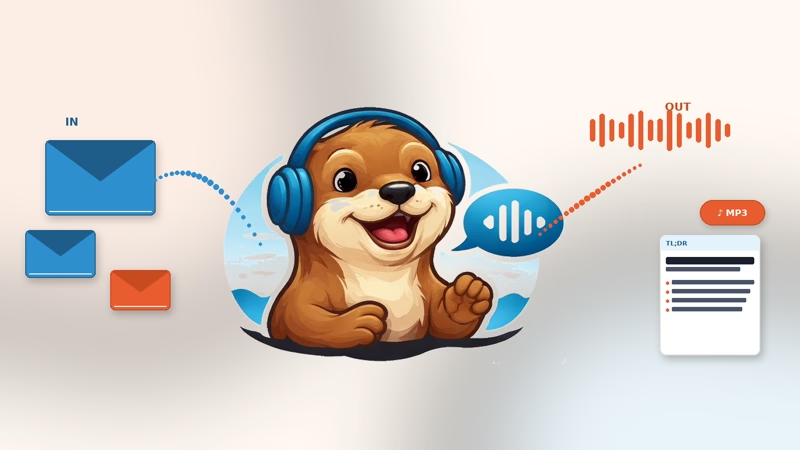
Forward any email, newsletter, PDF, or HTML page to OtterSay. You get back one of two things: a smart TL;DR that pulls out the key points and the questions a thoughtful reader would ask, or a clean audio file you can listen to while commuting, running, or doing anything that doesn't require your eyes.
That's it. Deliberately simple.
The bigger picture
OtterSay is also, in a way, proof of something I care about deeply. I founded Kopec InnoTech partly because I see so many small businesses and micro-companies struggling to keep up with AI, and understandably so, especially if they're outside the tech world. The pace of change is real, and it's a lot to navigate when your focus is on running your actual business.
If you run a small company and you're not sure how AI could help you, or where to even start, that's exactly what Kopec InnoTech is there for. Fill in the form on the site and I'll come back to you with a concrete report on where AI could make a real difference in your processes. Maybe that's where the conversation ends, or maybe we work together further. Either way, you'll have something useful.
Where things stand
OtterSay is live. Free accounts are available at ottersay.com. If you deal with more content than you can get through (newsletters, articles, things you know are worth reading but haven't gotten to), forward one to OtterSay and see how it fits into your day.
The otter is talking.